More Than Just Fabric: The Birth of a Global Icon
In the vast lexicon of human symbols, few are as instantly recognizable or as emotionally resonant as the rainbow flag. Today, as it flies proudly from government buildings, community centers, and private homes in 2026, it is often taken for granted as a universal emblem of inclusivity. However, the history of the original pride flag is a story of radical creativity, community grit, and a profound desire for visibility in a world that, at the time, preferred the LGBTQ+ community to remain in the shadows. It was not a corporate creation or a marketing gimmick; it was a handcrafted gift to a movement in desperate need of a positive, life-affirming symbol.
Before the rainbow flag, the primary symbol used by the gay community was the pink triangle—a badge of shame reclaimed from the horrors of Nazi concentration camps. While powerful, the pink triangle was a symbol rooted in tragedy and victimization. Gilbert Baker, a young activist and drag performer in San Francisco, envisioned something different. He wanted a symbol that represented beauty, joy, and the diverse spectrum of the human experience. This deep dive explores the genesis of Baker’s vision, the meticulous process of its creation, and how this queer cultural icon became the defining image of a global revolution.
San Francisco, 1978: The Radical Vision of Gilbert Baker
The year was 1978, and San Francisco was the beating heart of the gay liberation movement. Harvey Milk, the first openly gay elected official in California, had a direct challenge for his friend Gilbert Baker: the movement needed a new “logo.” It needed something that could unify the disparate groups within the community and provide a beacon of hope during a time of intense political struggle and advocacy. Baker, who had taught himself to sew while serving in the military, took this challenge to heart.
The inspiration for the rainbow came from various sources, including the hippie movement’s “Flag of the Races” and the general idea of the rainbow as a natural, universal phenomenon that encompasses all colors. Baker saw the rainbow as a perfect metaphor for the diversity of sexual orientation and gender identity. It was a flag that belonged to everyone and no one at the same time—a true symbol of the people.
The Original Eight Stripes: A Symphony of Meaning
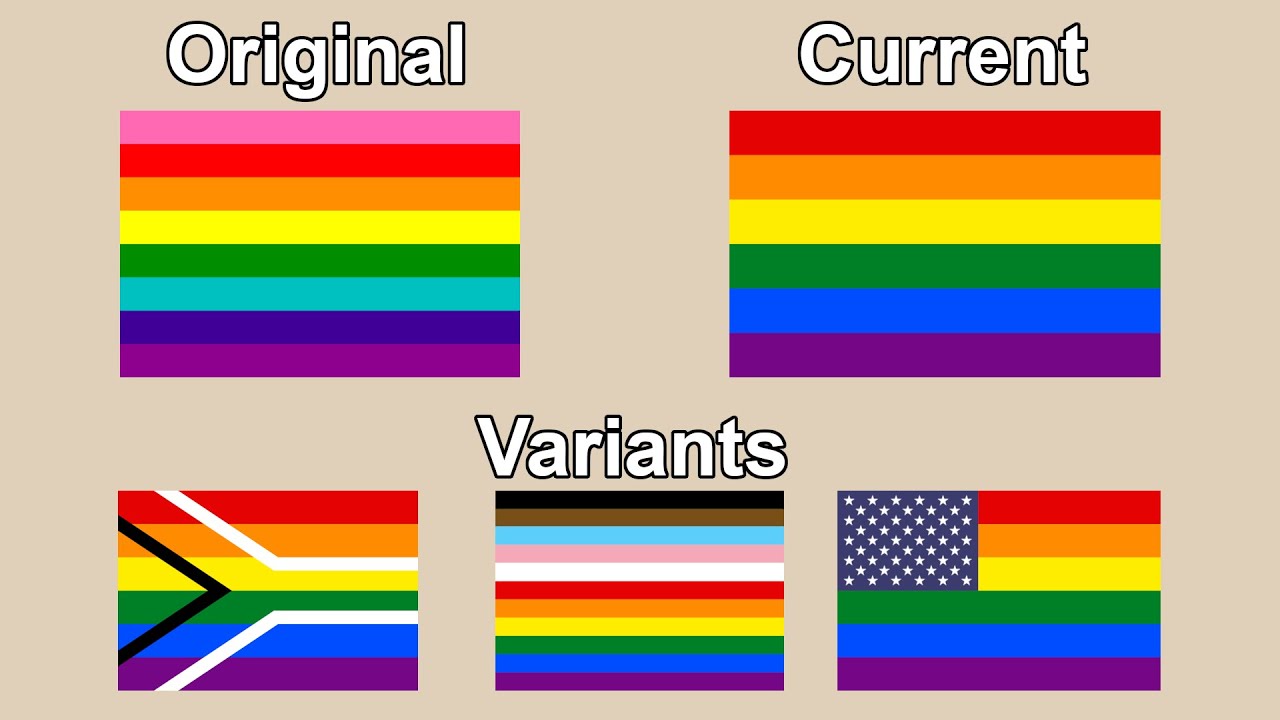
The very first pride flag, which debuted at the San Francisco Gay Freedom Day Parade on June 25, 1978, was not the six-stripe version we most commonly see today. The history of the original pride flag begins with eight distinct stripes, each meticulously chosen by Baker to represent a specific aspect of the human spirit and the community’s aspirations.
The Eight Stripes and Their Original Meanings:
- Hot Pink: Represented Sexuality. This stripe was eventually dropped due to the unavailability of pink fabric for mass production.
- Red: Represented Life. A symbol of the vitality and resilience of the community.
- Orange: Represented Healing. A nod to the community’s need for internal and external recovery from trauma.
- Yellow: Represented Sunlight. A call for visibility and the courage to step out of the shadows.
- Green: Represented Nature. A reminder that queer identities are a natural and beautiful part of the world.
- Turquoise: Represented Magic/Art. Celebrating the creative contributions and the “magic” inherent in queer expression.
- Indigo: Represented Serenity. The pursuit of peace and inner harmony.
- Violet: Represented Spirit. The collective soul and the enduring spirit of the LGBTQ+ people.
The process of creating these first flags was a true community effort. Baker and a team of thirty volunteers gathered at the Gay Community Center in San Francisco. They used massive trash cans filled with dye to hand-tint thousands of yards of cotton. The spirit of that room—filled with laughter, shared purpose, and the scent of dye—is the foundational energy that still exists in every pride flag today. It was a literal weaving together of community stories.
Evolution and Practicality: From Eight to Six Stripes
The transition from Baker’s original eight-stripe design to the modern six-stripe version was driven by the practicalities of mass production and the tragic events of late 1978. Following the assassination of Harvey Milk in November of that year, the demand for the flag skyrocketed as a symbol of mourning and renewed resistance. The Paramount Flag Company began selling a version that removed the hot pink stripe, simply because the fabric was too expensive and difficult to source in bulk.
In 1979, the flag was modified again. When hung vertically from the lamp posts of San Francisco’s Market Street, the center stripe (turquoise) was obscured by the post itself. To solve this, Baker and the organizers decided to simplify the design further, combining turquoise and indigo into a single royal blue stripe. This resulted in the iconic six-stripe “Red, Orange, Yellow, Green, Blue, Violet” design that became the global standard for decades. Despite these changes, the core history of the original pride flag remains anchored in Baker’s primary vision of a natural, celebratory spectrum.
The Flag as a Global Catalyst for Visibility
As the 1980s and 90s progressed, the pride flag transcended its San Francisco roots to become a truly international symbol. It was raised at the first pride marches in London, Sydney, and Berlin. It became a silent protest in countries where LGBTQ+ rights were non-existent and a triumphant banner in regions celebrating legal victories. The flag’s power lies in its simplicity; it requires no translation. It communicates a singular message: “We are here, we are beautiful, and we are not going anywhere.”
The history of the original pride flag is also a history of the legal and social battles it flew over. It was present at the Stonewall riots’ anniversaries, it draped the caskets of those lost to the AIDS crisis, and it flew over the steps of Supreme Courts during the fight for marriage equality. This visibility has been a primary driver of inclusive global social shifts, forcing societies to acknowledge the existence and the humanity of their queer citizens.
The 2026 Context: Progress, Intersex-Inclusion, and Intersectionality
In 2026, the pride flag continues to evolve. While the six-stripe rainbow remains a beloved classic, we have seen the rise of the “Progress Pride Flag,” designed by Daniel Quasar in 2018. This version adds a chevron on the left side with black and brown stripes to represent marginalized LGBTQ+ people of color, and light blue, pink, and white stripes to represent the transgender community. More recently, the “Intersex-Inclusive Progress Pride Flag” by Valentino Vecchietti adds a yellow triangle with a purple circle to represent the intersex community.
These evolutions do not replace the history of the original pride flag; rather, they build upon Baker’s foundational idea of inclusivity. They remind us that the work of equality is never truly finished and that our symbols must expand to embrace the most marginalized among us. The flag is a living document, reflecting the growth and the deepening understanding of our own community’s diversity.
Preserving the Legacy: The Flag in Museums and Archives
The original flags from 1978 are now considered priceless artifacts of human rights history. One of the original eight-stripe flags was recently rediscovered and is now part of the permanent collection at the San Francisco GLBT Historical Society. Seeing the hand-dyed, slightly faded fabric in person is a profound experience for many. It serves as a physical connection to a time of immense bravery and creative defiance. Museums around the world, from the MoMA in New York to the V&A in London, now recognize the pride flag as a masterpiece of design and a cornerstone of modern cultural history.
Conclusion: The Future of the Rainbow
The history of the original pride flag is a testament to the power of a single idea to change the world. Gilbert Baker once said, “Our job as gay people was to come out, to be visible, to live in the truth, as I say, to get out of the lie.” The flag was the tool he created to help us do exactly that. It is a symbol that has survived commercialization, political backlash, and the passage of time because its core message—love, life, and spirit—is indestructible.
As we look toward the future, the rainbow flag will undoubtedly continue to change, reflecting new identities and new struggles for justice. But the spirit of that first 1978 hand-dyed flag will always be at its heart. At Gay Telegraph, we honor the legacy of Gilbert Baker and the countless activists who carried this flag before us. We fly it not just to celebrate how far we’ve come, but to light the way for where we still need to go. Long may it wave.